|
By Martin Cassidy
BBC Northern Ireland rural affairs
correspondent |

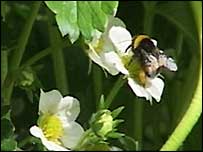
Imported bees quickly distribute pollen from
flower to flower |
Irish
strawberry growers have cracked the lucrative early market by
importing bumble bees from the Netherlands to pollinate the crop.
Down in Ballinderry in south Antrim, the strawberry plants are
flowering early this year.
And in just a few weeks, the strawberry beds lining the
greenhouses should be hanging heavy with fruit.
But all that depends on pollination.
Most Irish bees are only beginning to stir at this time of the
year.
But the strawberry growers have looked abroad for a solution and
now ship in mobile hives of bumble bees all the way from Europe.
Grower Joanne Best explained the vital role the bee plays:
"Pollination involves the bee going into the centre of the flower
and after it has pollinated the plant, the flower keeps on
developing and the petals fall off.
"That is where the fruit stems from - that is the actual
strawberry in the centre," she said.
'Pollinate entire greenhouse'
It's mid-morning in the strawberry greenhouse and the temperature
is rising thanks to the bright April sunshine.
The heat is very much to the bees' liking and the inhabitants of
the brightly coloured cardboard hive are stirring.
Soon, the greenhouse is humming as the bees set about their work
on the rows of strawberries, quickly distributing pollen from flower
to flower.

Joanne Best will be picking fruit for
supermarket order |
The busy bee's reputation is well deserved and this hive, which
houses just 50 bees, is sufficient to pollinate the entire
greenhouse.
The greenhouse door is left open so the bees can venture into the
open, but it is the early strawberry blooms which keep attracting
them back.
Just as well too, as the shape of each individual strawberry
depends on proper pollination.
In just a few weeks, Joanne Best will be picking the fruit for a
lucrative supermarket order and says that only perfectly shaped
fruit will do.
"If the bee doesn't do its job, the strawberry can be very square
at the bottom or have an awful lot of creases or be totally
misshapen and then they are very hard to sell," she says.
Back at the hive, the bees are returning from another foraging
mission. One by one they enter their cardboard home.
Soon their work in the strawberry fields will be done, leaving
them free to link up with the indigenous bumble bee population.


 E-mail this to a friend
  Printable version

