 |
Classifieds: Cars |  |
| Jobs |  |
| Dating |  |
| Shopping |  |
|
||||||||||||||||||||||||||||||||||||||||||||||||||||||||||||||||||||||||||||||||||||||||||||||||||||||||||||||||||||||||||||||||||||||||||||||||||||||||||||||
 |
||||||||||||||||||||||||||||||||||||||||||||||||||||||||||||||||||||||||||||||||||||||||||||||||||||||||||||||||||||||||||||||||||||||||||||||||||||||||||||||
|
||||||||||||||||||||||||||||||||||||||||||||||||||||||||||||||||||||||||||||||||||||||||||||||||||||||||||||||||||||||||||||||||||||||||||||||||||||||||||||||



|
|||||||||||||||||||||||||||||||||||||||||||||||||||||||||||||||
|
|||||||||||||||||||||||||||||||||||||||||||||||||||||||||||||||
By Mike Linn, USA TODAY
MONTGOMERY, Ala. — As feared as anything in
their weight class, fire ants have sent many a small boy crying for his
mother. They've killed small pets, incapacitated airport runway lights
and short-circuited air-conditioners.
The pesky insects, as much a part of Southern lore as sweet tea and greasy grits, are a $6 billion-a-year problem in the USA. "There's no end of horror stories when it comes to fire ants," says Paul Ruffin, a novelist and English professor at Sam Houston State University in Huntsville, Texas. "The fire ant has become a symbol of the diabolical in the South." Now scientists believe they have an answer to the burgeoning population of the insect that infests much of the South, from the Carolinas to San Antonio. Their weapon: a tiny fly that lays an egg in the fire ant. The larva feeds off nutrients in the ant's head. About two weeks later, the ant's head pops off, the newborn fly takes wing, and the cycle starts anew. 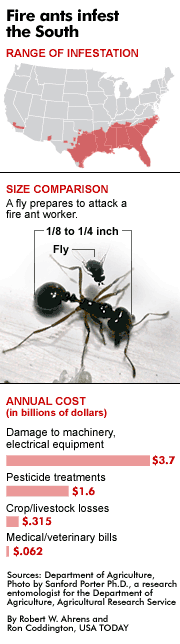 In the past eight years, scientists have unleashed billions of the flies in Alabama, Florida, Mississippi, South Carolina, Tennessee, Georgia, Louisiana, Texas, North Carolina, Arkansas, Oklahoma and California in an effort to cut down the fire ant population. Progress is measured by how far the flies travel. Descendants of the first group released in Gainesville, Fla., have reached Tallahassee, about 130 miles away. Fire ants are an invasive species from South America that probably first arrived in the USA on potted plants at a shipyard in Mobile, Ala., around 1918. They spread as the plants were shipped to nurseries around the South. Tough and ravenous "It was certainly an accident they got to America," says Robert Vander Meer, research leader of the U.S. Department of Agriculture's Imported Fire Ant and Household Insects Research Unit in Gainesville. "Nobody wanted these creatures here, that's for sure. They're opportunistic. ... They eat anything, and they take advantage of any situation they can find." Fire ants are a formidable foe. In some regions they produce up to 100 colonies per acre and 250,000 ants per colony. An estimated 1% of the population in the South is sensitive or highly allergic to a fire ant's venom, says Sanford Porter, another Agriculture Department insect expert in Gainesville. "To those people, even a single ant bite is a scary prospect," he says. "If you had that allergy, where could you go and be sure you wouldn't get stung, outside of a five-story high rise?" Wade Dedman, 34, of Gainesville, experienced the fear last year when his daughter, Gracelyn, then 9 months old, fell victim to a high fever and labored breathing after playing in the yard. After tests at a hospital, doctors found three ant bites on Gracelyn's ankle. They concluded that she was having a severe allergic reaction to the ant's venom. She has been receiving shots weekly ever since in an effort to build a tolerance to the poison, Dedman says. In addition, Dedman treats ant mounds he finds in his yard and always carries a syringe filled with medicine in case his daughter is bitten again. "You're never really going to be able to completely get rid of the fire ants," he says. "We live in Florida. ... If you stop treating them, they'll be right back." In addition to stinging people, fire ants play havoc with almost anything they touch. Telephone and air-conditioning companies pay hundreds of thousands of dollars annually to keep fire ants from shorting electrical systems, Vander Meer says. The ants also attack hatchlings of many species, including sea turtles. They torment calves and farm equipment. Lowell Hataway, a cattleman who farms 20 miles south of here, gave up trying to get rid of the ant colonies on his pasture after baits and other poisons brought only limited success. "It used to be the main topic of discussion among farmers: How can you get rid of the fire ants?" he says. "The worst problems farmers have is the ants keep mounds 1 to 2 feet (high). When you run over them with your equipment, it's like hitting a stump. It's been a problem for years." Fighting back Porter first saw a species of the fire ants' enemy — the phorid fly — in 1989 while doing research in South America. The flies were attacking ant colonies. Porter and other researchers tried to determine how and why the flies attacked the ants and to make sure they wouldn't threaten natives species in the U.S. They got the go-ahead to release them in the U.S. in 1997. So far, scientists have released three species of the phorid fly in Southern states. A fourth is in quarantine and will be sent into action if it doesn't threaten other species, he says. Researchers also hope to release highly specific pathogens — diseases that have been effective against South America fire ants. Porter says it can take about 10 years for the flies to fully infiltrate a state. Florida, the first state in which flies were released, is only about 70% covered. South America's fire-ant population is about one-seventh of the U.S.'s, probably because of natural enemies there, Porter says. The goal is to reduce the U.S. population to similar levels. "People in the South like working and living out of doors, but they don't do so in sandals and they're very careful about where they walk," Porter says. "The phorid fly will not eliminate the fire ants alone, but what we're hoping is that a complex of natural enemies will be able to drive the fire ant numbers back." Linn reports daily for the Montgomery (Ala.) Advertiser |
|||||||||||||||||||||||||||||||||||||||||||||||||||||||||||||||