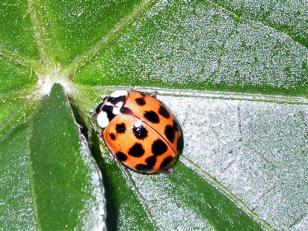
LONDON — British ladybugs are in danger of being overrun by insects
from Central and Southeast Asia that are encroaching on their food
supply, experts said Wednesday.
Harlequin
ladybugs, already a pest in North America, were first spotted in
Britain in September 2004 and are flourishing without the presence of
natural predators.
Michael Majerus, of Cambridge
University, predicted the foreign ladybugs _ the insects are known in
Britain as ladybirds _ could be found all around the country by 2008.
"There are currently 46 species of British ladybird," he said. "A few of those may be lost 10 to 20 years down the road."
Scientists
launched a survey at the Natural History Museum in March to track the
pesky beauties. Majerus said the public had been extremely helpful.
Harlequins are orange with black spots or black with either red or orange spots and larger than their British counterparts.
Introduced
to the United States to control aphid populations, the harlequins
morphed into pests by 1988, blemishing soft fruit, ruining grapes meant
for wine production and invading homes.
After similar
insect control programs in continental Europe, harlequins made their
way to Britain by hitching rides on flowers shipped from the
Netherlands and Belgium.
The bugs are able to fly for miles
and up to 10,000 feet high and Majerus believes that many simply flew
over the English Channel.
Harlequins have a voracious
appetite and eat aphids, pollen, nectar and even other ladybugs. They
have even been known to nip humans when hungry.
If
temperatures are right, harlequins can produce two or three generations
annually. Native British ladybugs are limited to one generation per
year.
Harlequins also threaten other species that eat aphids, and those who, in turn, eat them, and can disrupt entire ecosystems.
"This
is a concern worldwide in terms of invasive species unless we want to
have a global fauna," said Helen Roy, a ladybug expert at Anglia
Polytechnic University.
Currently, scientists have no way of stopping the bugs.
___
On the Net:
http://www.harlequin-survey.org/